How Maintenance Planning Supports Flexible Manufacturing in integrated rubber track manufacturing

Flexible rubber track manufacturing depends on more than changing molds or adjusting production schedules. Equipment condition also affects how quickly a line can move between track types, sizes, and application requirements. Maintenance planning supports this flexibility by keeping production steps stable and reducing interruptions during changeovers.
For manufacturers working with rubber track solutions, maintenance needs to cover the complete production flow rather than isolated machines. This is especially important in rubber track injection molding, where handling, curing, demolding, and process control must work together. Planned maintenance gives teams a clearer basis for scheduling different track programs without unnecessary disruption.
Maintenance Planning Starts with the Production Flow
Integrated rubber track manufacturing combines several linked operations. If one section becomes unstable, the effect can spread to later stages. Maintenance planning should follow the production sequence and identify components that directly affect material movement, molding, curing, demolding, and finished-part handling.
This approach is useful when one line serves agriculture tracks, construction tracks, military tracks, and snowmobile tracks. These products may place different demands on molds, handling routines, and operating settings. Maintenance tasks can be arranged around production plans so inspections and service work are completed before a different product program begins.
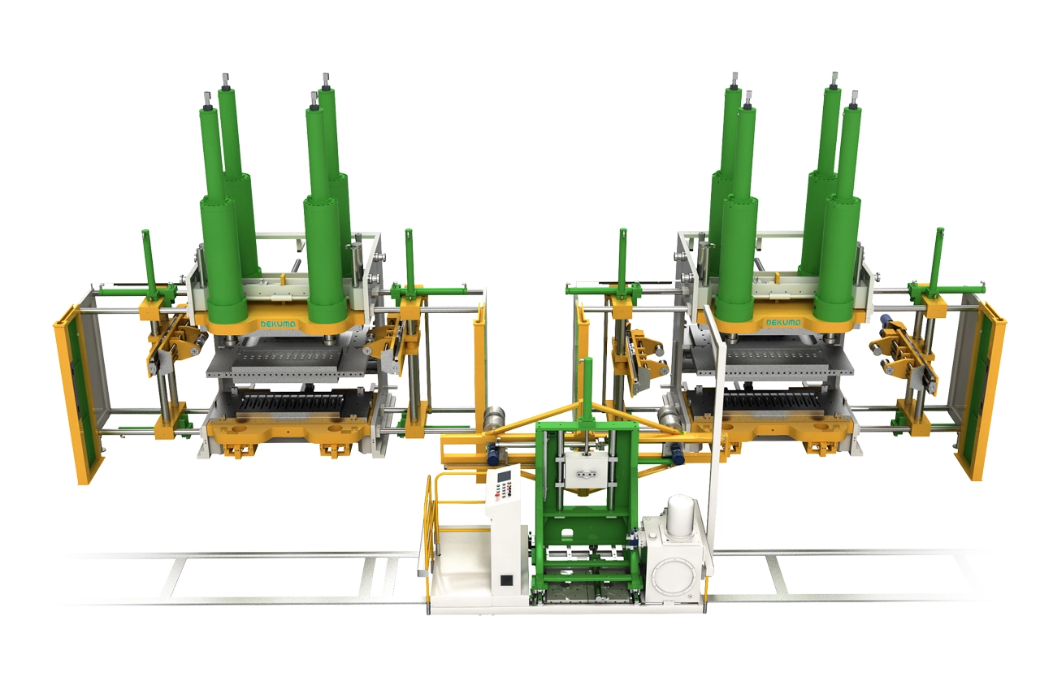
The Rubber Track Production Line from Dekuma is designed for construction, agricultural, and specialty vehicle rubber tracks. It integrates automated handling, demolding, and process control. This integrated layout makes maintenance coordination important because the condition of one section can influence the stability of the complete manufacturing sequence.
Planned Service Makes Changeovers More Predictable
Flexible manufacturing often requires changes in product type or production batch. Maintenance work performed without coordination can make these transitions harder to manage. Production teams may face unexpected checks, adjustments, or component replacement during a scheduled changeover.
Planned service schedules help separate routine maintenance from urgent repairs. Teams can inspect mechanical connections, handling components, demolding areas, and process-control elements before the next production run. The purpose is to align maintenance with actual operating conditions and planned product changes.
This is where rubber track solutions benefit from an integrated maintenance approach. When production and maintenance teams share the same schedule, they can prepare the line for the next track specification while limiting avoidable downtime. That makes manufacturing flexibility easier to manage in daily operations.
Automation Changes the Maintenance Focus
Higher automation can reduce repeated manual handling, but it also changes what maintenance teams need to watch. Coordinated movement, demolding, and process control depend on consistent equipment response. Problems in one automated section may affect timing across connected operations.
The production line includes high automation and smart monitoring functions. These features can support maintenance planning by giving operators a clearer view of machine status and production behavior. Maintenance teams can use operating information to decide which areas need attention instead of relying only on fixed service dates.
For injection molding for rubber track, this approach is useful because molding is only one part of the production cycle. Stable handling before and after molding also matters. Maintenance planning should connect equipment condition with the complete process rather than treating the molding unit as an isolated machine.
Curing and Demoulding Need Coordinated Attention
Curing is a critical stage in rubber track production because it affects production rhythm and the timing of later handling. Maintenance planning should consider how curing-related operation interacts with the rest of the line, especially when schedules change between track categories.
The Rubber Track Production Line includes a clever curing shutdown function. In practical planning, this can help teams coordinate shutdown procedures with maintenance windows. Service work can be arranged around planned stops instead of being added randomly during active production.
The automated demolding process supports repeated production, but its condition should be checked together with surrounding handling equipment. Dekuma also emphasizes continuous iteration in the production solution, reflecting the need to improve how equipment, process control, and maintenance practices work together over time.
Maintenance Records Support Flexible Production Decisions
Maintenance planning becomes more useful when records are connected with production history. Teams can compare equipment condition with track type, production frequency, changeover timing, and recurring service needs. This creates a basis for deciding when maintenance should be carried out.
Such records can help plants separate normal wear from process-related issues. If a production program repeatedly requires inspection in the same area, the maintenance team can review that pattern before the next batch. This supports more focused preparation and avoids treating every product change in the same way.
For manufacturers evaluating rubber track solutions, this is an important part of flexible manufacturing. Equipment capability matters, but the way maintenance is organized also influences whether a line can switch between different production demands with less disruption and clearer scheduling.
Flexible Manufacturing Depends on Planned Equipment Care
Maintenance planning supports flexibility by connecting equipment condition with production schedules, changeovers, curing, demolding, and automated handling. It gives manufacturing teams a structured way to prepare for different track programs instead of reacting to problems after production has started.
In injection molding for rubber track, flexibility is not only a question of machine functions. It also depends on how well maintenance fits the integrated production process. When service work, monitoring, and production planning are coordinated, manufacturers can manage varied rubber track programs with more predictable operating conditions.
